Ontario Nature Blog
Receive email alerts about breaking conservation
and environmental news.
© Lora Denis
Wasaga Beach Provincial Park is one of Ontario’s most beloved natural places and provides habitat for endangered piping plovers. Stretching 14 kilometres along the Georgian Bay shoreline, it attracts more than one million visitors annually. Wasaga Beach is the most visited provincial park in the province. Beyond the crowds, the park protects dune ecosystems and habitats that are vital to other at-risk species like the eastern hognose snake, Hill’s thistle and the monarch butterfly.
Now, the Government of Ontario has removed provincial park protections from a significant portion of the beach and intends to transfer the lands to the Town of Wasaga Beach. This would weaken long-standing protections for these fragile habitats, and the piping plovers that depend on them.
The news came in May 2025, when the Government of Ontario announced the transferring of lands to the Town of Wasaga Beach to develop the waterfront for tourism.
In June, the government posted a proposal on the Environmental Registry (ERO #025-0694) to amend the Provincial Parks and Conservation Reserves Act. The proposal would remove several parcels of land from Wasaga Beach Provincial Park (roughly 60 hectares). Four of the park’s eight beach areas, including Areas 1 and 2, New Wasaga Beach and Allenwood Beach are included in the transfer. These areas are the most important piping plover habitat at Wasaga Beach.
At the end of November, the Government of Ontario passed Bill 68, Plan to Protect Ontario Act (Budget Measures), 2025 (No.2), which included a schedule removing these lands from regulation under the Provincial Parks and Conservation Reserves Act.
Public response to the proposal was overwhelmingly opposed, with approximately 98 percent of comments objecting to the removal of beach areas from the park. Key concerns focused on potential environmental impacts, legal and governance issues, and implications for public access and equity.
Despite this feedback, no changes were made to the proposal, citing the Town of Wasaga Beach’s commitments to maintaining public access, and avoiding development on the beach. Lands removed from the park will remain subject to Ontario’s environmental protection laws.
While the province has stated the beaches will remain public, what remains unclear is how these lands and their ecological integrity would be managed once they are no longer under provincial park legislation. These changes come at the hills of over 100 species losing protection under the province’s new Species Conservation Act.
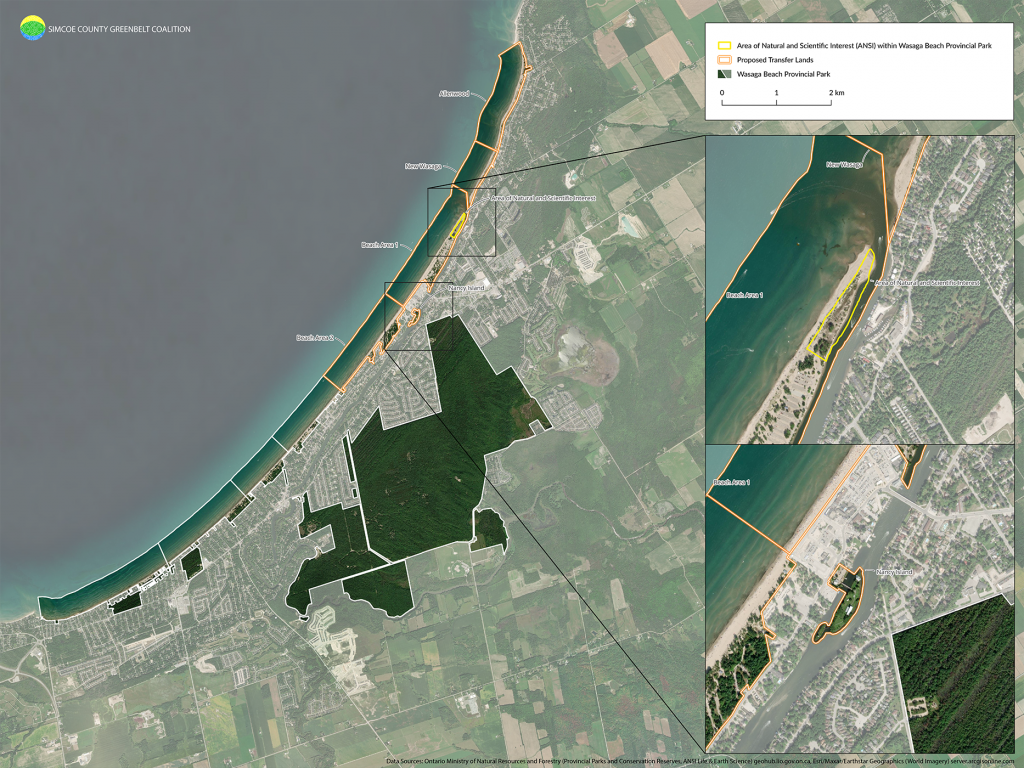
The changes to both land ownership and species at risk laws significantly heighten the endangerment to piping plovers at Wasaga Beach.
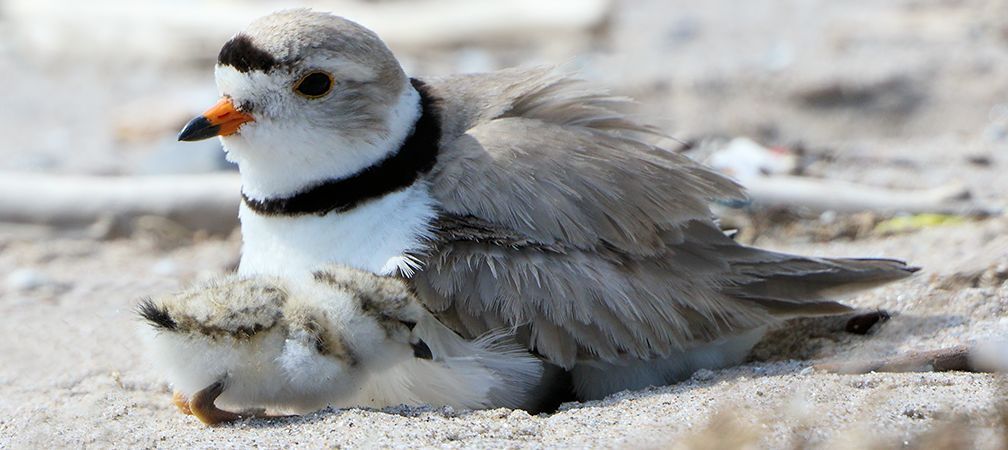
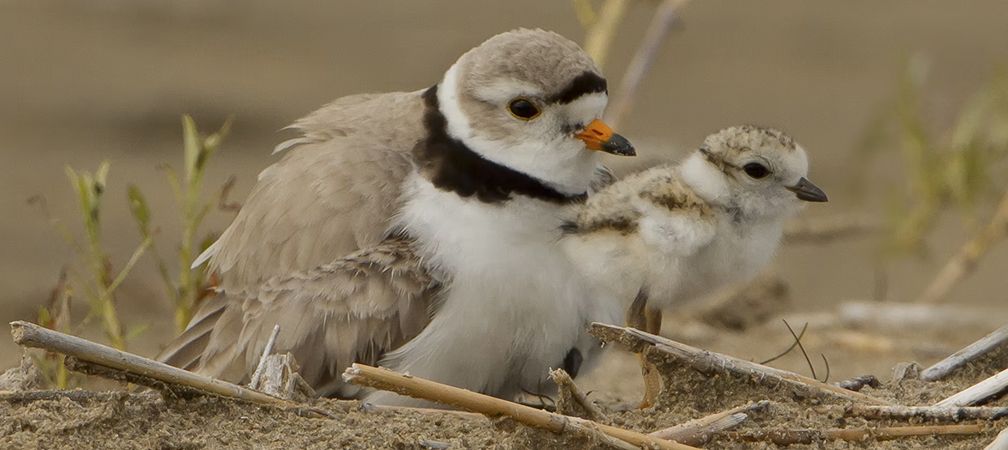
Piping plovers are small shorebirds that nest directly on open sand, making them especially vulnerable to disturbance. In Ontario, they are listed as endangered under federal law, and Wasaga Beach has played a critical role in their population recovery. Successful nesting depends on a healthy dune ecosystem, undisturbed beaches, and careful seasonal management – conditions that can be easily disrupted if the lands are developed for tourism.
With decisions about shoreline use, tourism infrastructure, and beach “maintenance” now under municipal authority, activities like beach raking could threaten nesting piping plovers and weaken the dune systems that naturally protect the shoreline from erosion, storms, and climate impacts.
The replacement of Ontario’s Endangered Species Act with the Species Conservation Act narrows the definition of protected habitats, potentially leaving dunes and foraging areas outside nesting sites unprotected. In addition, the Government of Ontario intends to de-list migratory birds all together to “remove duplication for species already receiving federal protections.” To date, the federal government has been reluctant to implement the Species at Risk Act on non-federal lands, which is why complementary provincial legislation was always necessary.
In a 2025 media release, Ontario Nature’s Conservation Policy and Campaigns Director Tony Morris said transferring these areas to the town puts both wildlife and long-standing conservation efforts at risk.
Under municipal ownership, decades-long dune restoration and habitat protections, carried out by Ontario Parks, could disappear. Without the Provincial Parks and Conservation Reserves Act in place, Morris says the town would not be required to manage the land for ecological health.
In response to the loss of provincial protections, Ecojustice has filed a formal request on behalf of Environmental Defence and Ontario Nature, calling on the federal Minister of Environment, Climate Change and Nature Julie Dabrusin, to recommend an Emergency Order under the federal Species at Risk Act.
The emergency order request seeks immediate protection for critical piping plover habitat at Wasaga Beach. With the nesting season approaching, conservation groups are calling for action by March 1, 2026, noting that further delays could have serious consequences for the species’ survival and recovery in Ontario.
Call or email your MPP, and elected officials from the Town of Wasaga Beach to ask what they are doing to ensure Wasaga Beach remains a natural shoreline that balances tourism and a healthy ecosystem for the species that call it home.
You can also learn about the major projects and initiatives at the Town of Wasaga Beach.
If you are a resident of Wasaga Beach, visit this website to learn how you can get involved.
You can also contact Wasaga Beach’s Mayor and Council to ask them to protect this globally rare ecosystem.

The items on the website (https://engagewasaga.ca) are pretty general, maybe just monitor it as actions come up periodically. The most effective current items is calling or emailing Mayor and Council (https://www.wasagabeach.com/mayor-council) and letting them know you are local and how you feel about the plans.
I do not see anything on the Wasaga Beach link for locals that shows a way to get involved in advocating for the natural environment at Wasaga Beach to be preserved. Is there a link to activities that focus on advocacy and activism? Thank you.
STEWARDSHIP NOT PLUNDER
Once we lose these gifts of nature, you can’t get them back!!!
Such shortsighted, greedy plans.
Save wasaga
If the piping plover ends up suffering as a result of this land transfer, then it would just be unfortunate collateral damage in Doug Ford’s quest to “build” Ontario. Ford, the premier who never met a developer or development he didn’t like.
By the way, did the municipality of Wasaga Beach actually request this transfer of ecologically-sensitive beach land to its control or has it been compelled by the Government of Ontario to accept the land? And what is the Town Council of Wasaga Beach’s position on protecting the piping plover? It should be a point of pride for the municipality that this endangered species has chosen to nest on its beaches, and it should do everything it can to ensure the bird’s survival.
Doug Ford and his cronies are stripping all of the conservation efforts in place to serve bunch of land developer’s agendas and their coffers; passing Bill68,and bunch of other Bills disregarding what the people of Ontario have asked of them to protect.
This illustrates the lack of curriculum within our schools both elementary and secondary to move the care and love for our planet forward for generations to come; instead of tourist destinations we will turn our gaze to preservation of our natural wilderness-birds, trees, animals, pristine lands untouched by human hands.
Doug Ford and his government just want to destroy everything that has to do with our environment time for a change save the birds
Thanks for this. I just sent the councillors an email.
NO development.
Save the birds!
NO development.
Save the birds!
This area needs to be protected for these very special little birds
We need to continue protecting beaches and wildlife for everyone’s survival.
These kinds of actions are completely unnecessary and harmful. The money involved to deliberate and make these changes is not worth the cost of continuing a practice that allows for the degradation of an ecosystem that, and please note, WE ARE ALL PART OF AND DEPEND ON FOR OUR WELL BEING
Save the plover and its nesting grounds. Keep Wasaga Beach a natural shoreline. Protect what little public lands we have and protect the ecosystem. Save the species.
Thank you