Ontario Nature Blog
Receive email alerts about breaking conservation
and environmental news.
© Lora Denis
Following the successful ten-year run of the Ontario Reptile and Amphibian Atlas, Ontario Nature developed a Long-Term Monitoring Protocol (LTMP) to fill important knowledge gaps about Ontario’s common and at-risk snakes. Since 2019, we’ve expanded the LTMP from nine monitoring locations to over 60 sites across the province! We recently published a Story Map where you can learn all about this project and how to get involved.
Ontario Nature’s Long-Term Monitoring Protocol (LTMP) for snakes was launched in 2019. It uses standardized survey methods across a large geographic area to help improve our understanding of snake populations, detect changes over time, and guide conservation efforts. The LTMP brings together First Nations, scientists, landowners and volunteers to monitor snakes across the province, using plywood boards placed within snake habitat.

The LTMP Story Map is a platform with text, maps, figures, and photos that showcases this project. It includes:
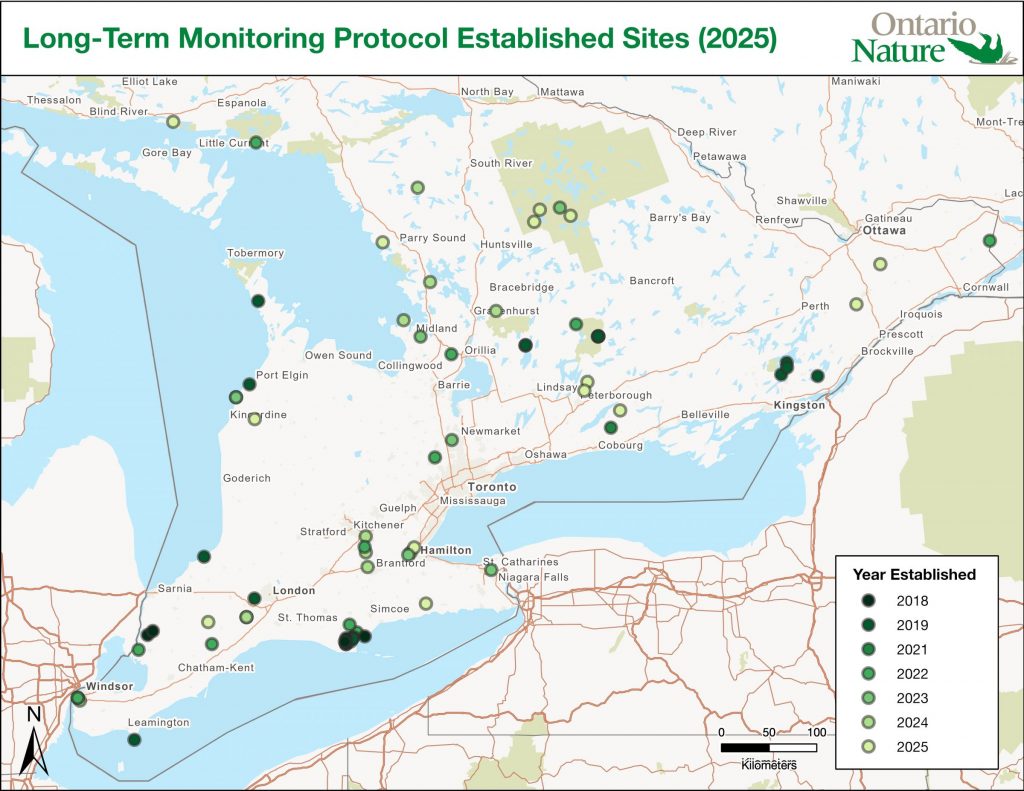
You can participate in snake surveys as a volunteer or set up a new snake monitoring site! Many of the existing sites are monitored by volunteers and may be looking for more people to help with surveys. If you have access to land with suitable snake habitat, you could set up your own site with plywood boards, survey for snakes, and contribute data to our province-wide database.
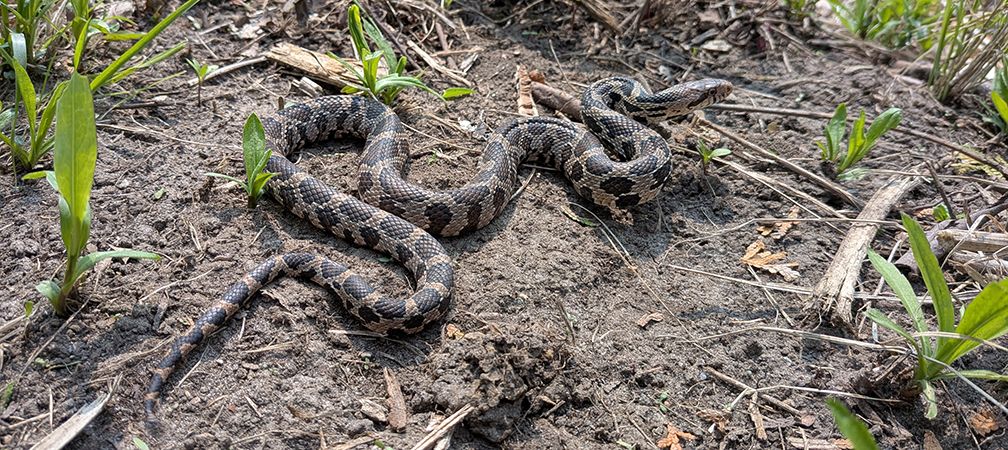
Check out the LTMP Story Map to find out more about the project and how to join! You can learn more about snakes and other reptiles and amphibians of Ontario in the Ontario Reptile and Amphibian Atlas. Test your knowledge with our identification quizzes!
The Story Map development was generously supported by the Hodgson Family Foundation.
I notice that your entire area of concern is all Southern Ontario. Are there any snakes around Sault Ste Marie and going north of us??
I have seen the occasional garter snake around here but very rarely.
My suggestion is : we can do our very best to protect forestation and giving the wildlife species like snakes for shelter as a safety hideout from other predators and human threats
Hi, I’m wondering if you are interested in surveying Tommy Thompson Park/Leslie St. Spit, if not doing so already. Although the area is a relatively recent landfill sight, it has been designated a Key Biodiversity Area and there are at least 3 species regularly found there (Garter, Milk and Decay’s Brown). I am part of a team of TRCA volunteer park naturalists in the park and we can inquire about participating if you think this area would be of interest. I look forward to your reply.
With appreciation,
John
This was a fantastic, very informative, and interesting blog!