Ontario Nature Blog
Receive email alerts about breaking conservation
and environmental news.
© Lora Denis
Insects are often underappreciated and overlooked. Our surroundings are teeming with insect life. New estimates of the global number of insect species are at least 14 to 20 million, but at the same time populations are dramatically decreasing worldwide. Research shows a 40% decrease in insect species with one-third of species being labeled as endangered. It’s more important than ever to acknowledge these incredible animals and their importance to Ontario’s ecosystems!
Ontario Nature’s 27 nature reserves are important refuges for insect biodiversity, especially Stone Road Alvar. This nature reserve is located on Pelee Island, the southernmost point in Canada and biodiversity hotspot due to its globally rare ecosystems, distinct micro-climates and diverse plant communities that allow rare species to flourish. On a recent trip to this nature reserve, staff experienced this biodiversity firsthand.
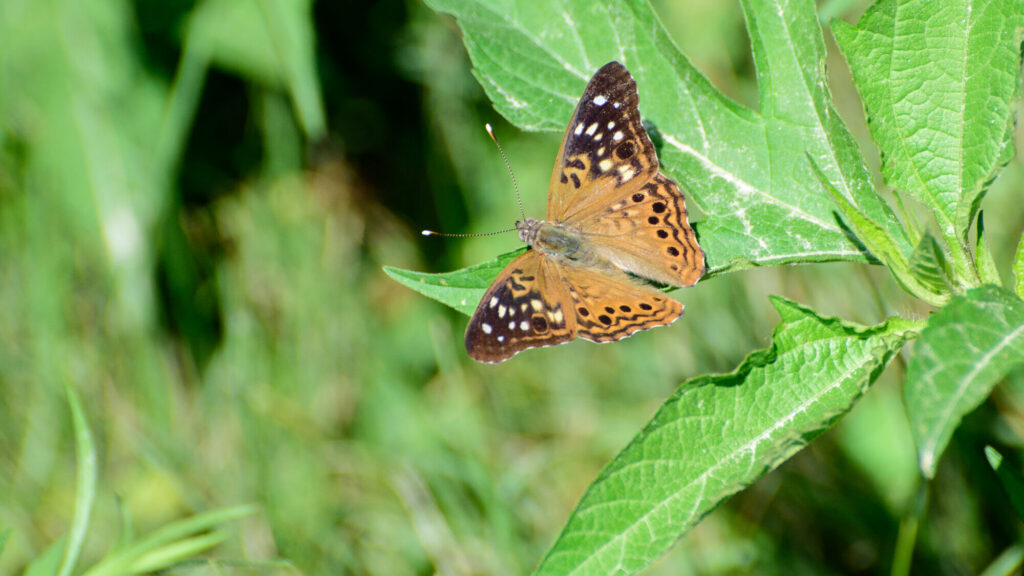
The hackberry emperor is a unique species of butterfly that is only found within Canada in Ontario and Quebec. It relies on the common hackberry tree, its only larval host, which is found in its highest abundance on Pelee Island and in Point Pelee National Park. The caterpillar is distinct with a green body and black tufts on its head that resemble horns, while the butterfly is tan or brown in colour with a distinct black eyespot on its forewings.
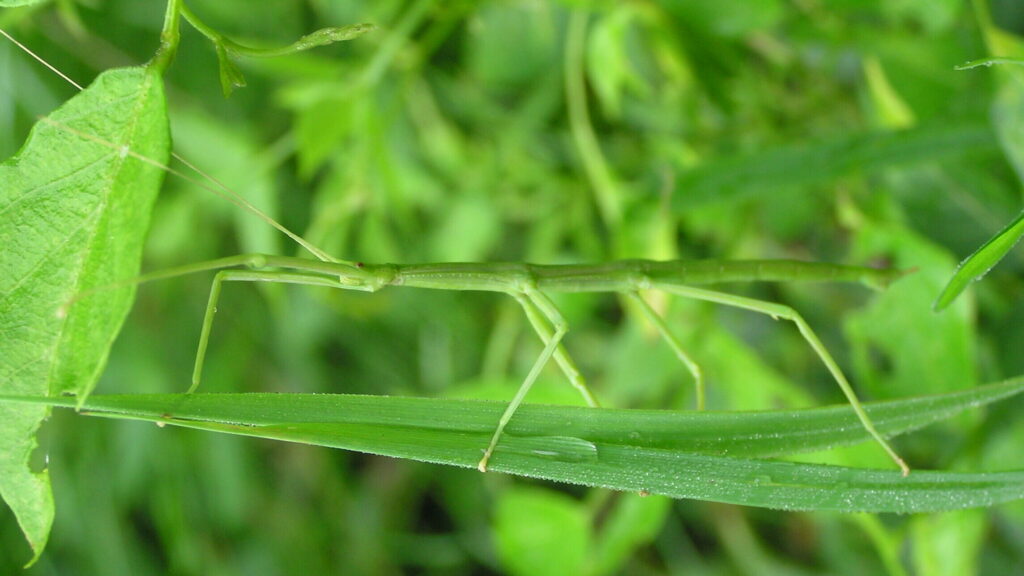
The northern walking stick is Canada’s only species of stick insect, a group of insects that specializes in camouflage, resembling sticks or twigs. They use this ability to blend in with their environment and avoid becoming prey to birds and other insectivores. In Canada, they can be commonly found in deciduous forests of Southern Ontario and Québec. These insects are mainly nocturnal and remain dormant during the day while becoming active at night to feed.
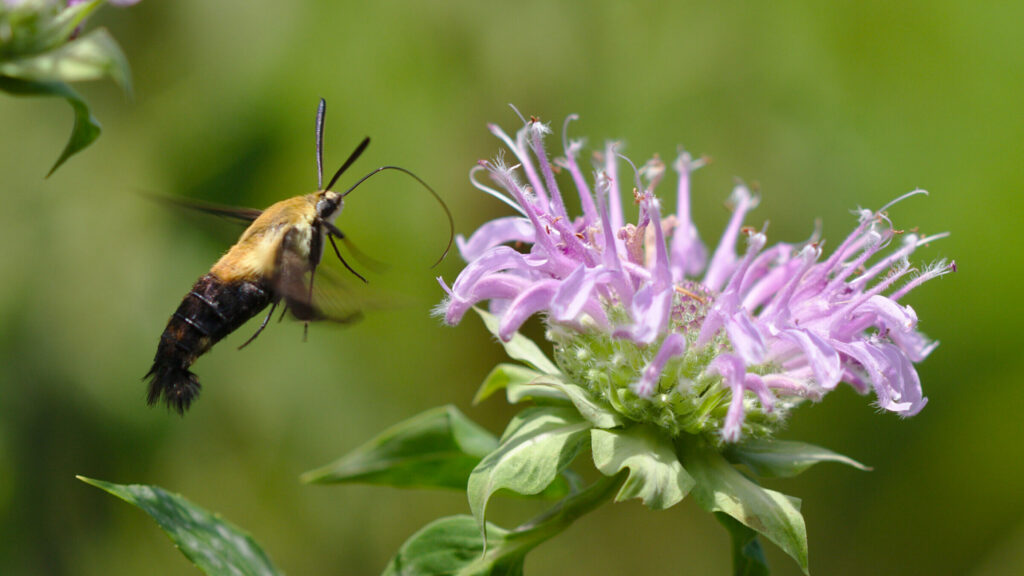
The hummingbird clearwing moth is a species that leaves a memorable impression! This day-flying moth has a green/tan upper back with red-brown bands on its lower back; its wings are clear with a red outline. It drinks nectar as it hovers like a hummingbird and pollinates flowers by collecting pollen on its body and spreading it from plant to plant. They can be observed in the summer months throughout most of southern and central Ontario, especially along forest edges and open meadow habitats. On Pelee Island, the restoration of the alvar by prescribed burn provides open meadow habitat that is great for this moth.
Despite facing drastic declines, the cause of the decline is still poorly understood. Research suggests a combination of several factors could be affecting populations including the intensity of agricultural land use, the application of pesticides and herbicides, habitat loss and degradation, the spread of invasive species and climate change. Insects are undervalued and underappreciated within conservation studies, but experts are raising the alarm on the decline and what effect it will have on our world. Insects are the foundation of countless food webs; their loss would have cascading consequences along the food chain – including our own. Additionally, approximately one third of global food crops are pollinated by bees and other pollinators; the decrease in these populations would impact food production, trade, and food security.
Even though insects are small and often overlooked, they do matter to ecosystems and the world we live in. The decline in insect population is important, and more research is needed to tackle the problem.
Want to support insect populations by planting native species? Learn how to grow native plants to protect pollinators and about native plant alternatives to non-native species in Ontario Nature’s Native Plants Guide.