Ontario Nature Blog
Receive email alerts about breaking conservation
and environmental news.
© Lora Denis
The ruby-throated hummingbird is one of Ontario’s most beloved birds, bringing flashes of colour to gardens and backyards each summer. However, new results from the third Ontario Breeding Bird Atlas (Atlas-3) suggest this tiny species is declining in parts of the province.
The good news, though, is that there are simple ways to help, starting close to home.
New data from Atlas-3 show that ruby-throated hummingbirds have declined in breeding-season abundance by about 24% across Ontario over the past two decades, with losses occurring across much of central and eastern Ontario. These estimates come from standardized point counts—surveys in which experienced birders count all birds seen and heard in five minutes—which allow scientists to compare species numbers between Atlas-2 (2001–2005) and Atlas-3 (2021–2025). Hummingbirds increased in Ontario between 1970 and 2005, likely assisted by their adaptability to suburban environments and use of feeders, but the recent decline is concerning.
This preliminary map displays the estimated change in relative abundance of ruby-throated hummingbirds in Ontario between Atlas-2 (2001-2005) and Atlas-3 (2021-2025). Hummingbirds declined by 10% across a broad swath of central and eastern Ontario. Dot size represents relative abundance (larger dots = higher abundance), and the color represents the estimated percent change. The Atlas-3 publication, planned for Fall 2027, will have the final version of the map.
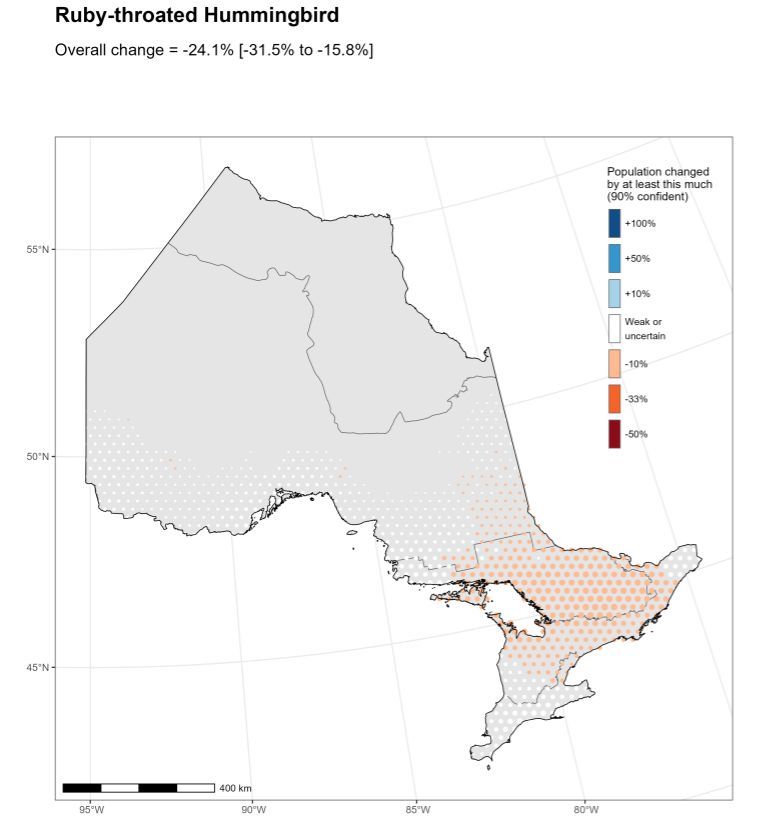
This preliminary map displays the estimated change in relative abundance of ruby-throated hummingbirds in Ontario between Atlas-2 (2001-2005) and Atlas-3 (2021-2025). Hummingbirds declined by 10% across a broad swath of central and eastern Ontario.
Dot size represents relative abundance (larger dots = higher abundance), and the color represents the estimated percent change. The Atlas-3 publication, planned for Fall 2027, will have the final version of the map.
© Atlas-3
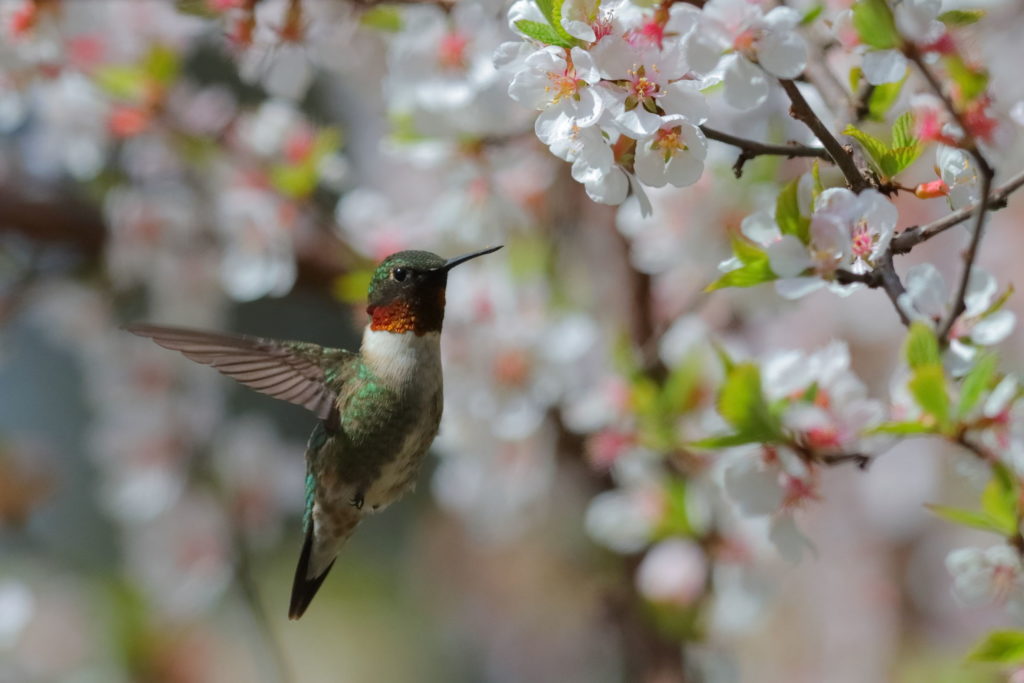
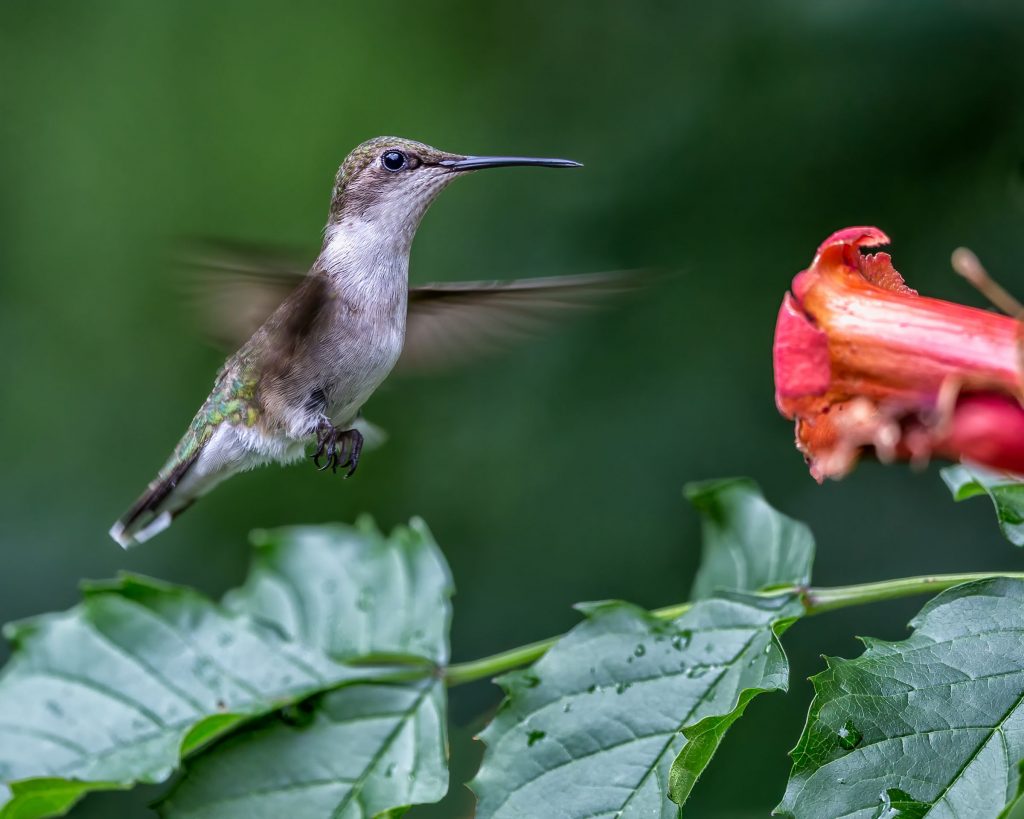
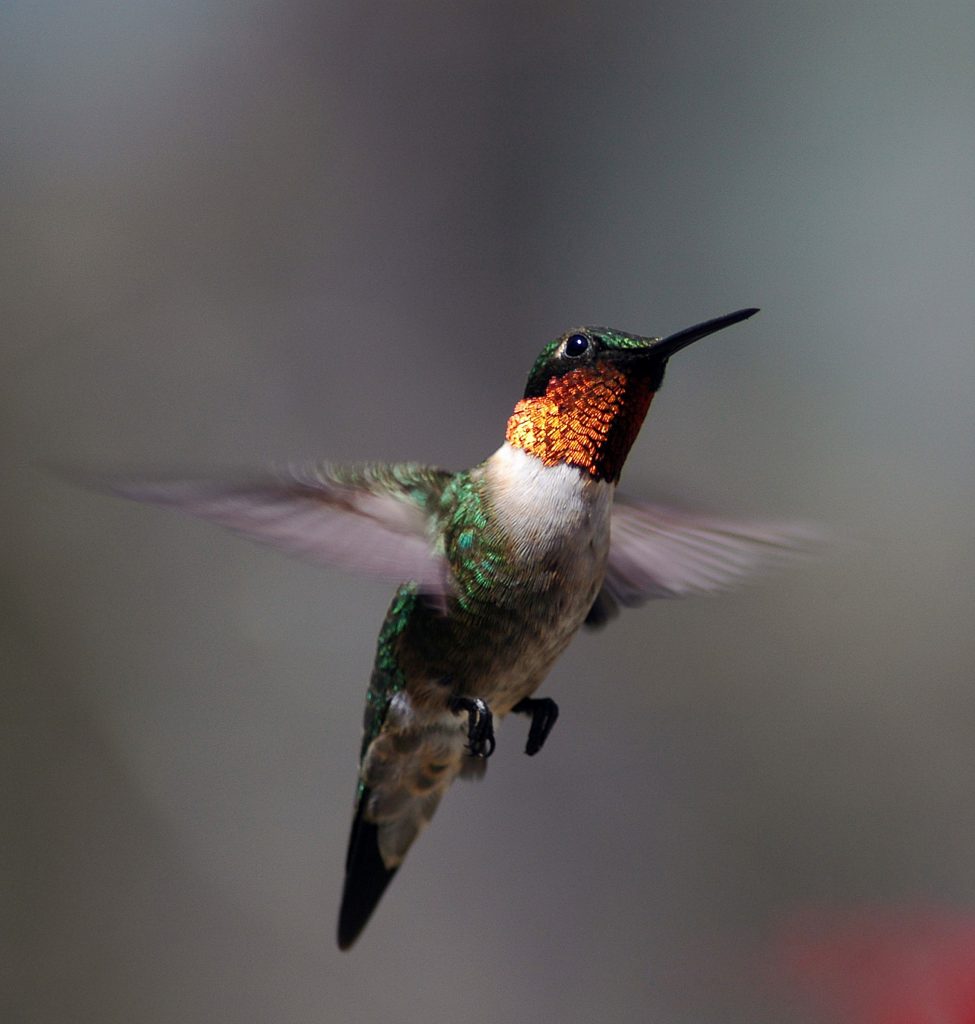
The ruby-throated hummingbird is the only breeding hummingbird found in eastern Canada. These tiny birds have long, thin bills; shiny green backs; and dusky-white bellies. Males have an iridescent throat patch, or “gorget”, that looks dark from some angles but bright red head-on.
They feed on nectar from red or orange tubular flowers such as cardinal flower, jewelweed and bee-balm, and will also visit feeders. Insects and spiders are also essential food sources, especially for growing nestlings.

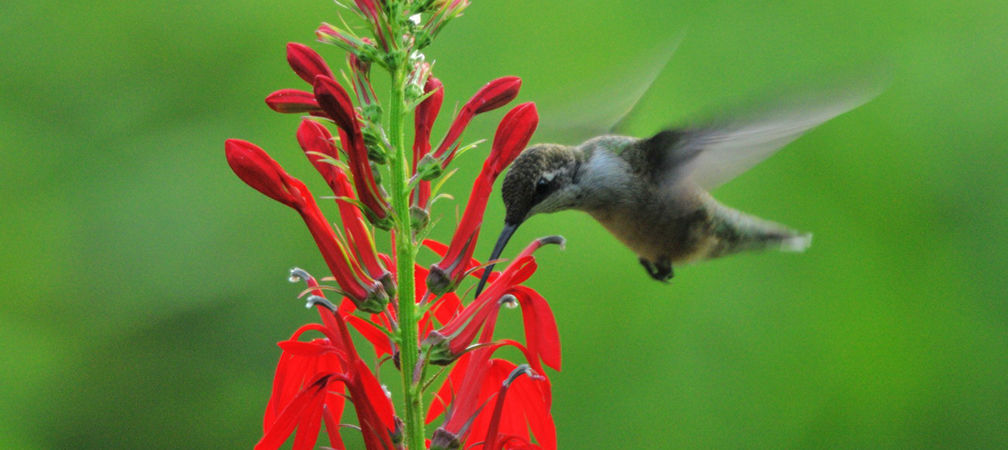
As migratory birds, hummingbirds face challenges throughout the year, including habitat loss, insect declines and climate-driven shifts in seasonal timing.
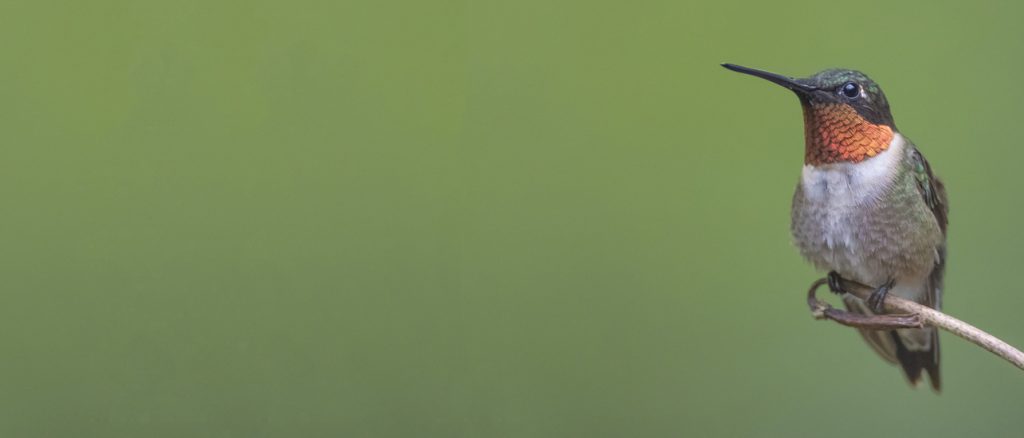
One of the best ways to help is to make your yard hummingbird-friendly! Plant native flowers that provide nectar and attract insects for hummingbirds and their young, and choose a mix of bloom times and vegetation heights, from groundcovers to shrubs and trees.
You might find these resources helpful:
A hummingbird-friendly yard is also insect- and spider-friendly. Hummingbirds not only eat insects and spiders; they also use sticky spiderwebs to bind together thistle or dandelion down to make their tiny nests. Spider silk allows the nest walls to stretch to fit growing nestlings. You can help by leaving spider webs standing in your yard, avoiding the use of pesticides, and leaving leaf litter on the ground to provide shelter and nesting sites for insects and spiders.
If you put out a feeder, keep it clean. Regular cleaning helps prevent disease, fermentation, and mold. Place feeders out of reach of cats and away from windows where birds could collide.
The ruby-throated hummingbird reminds us that the choices we make in our yards and communities can have a big impact on birds. In addition to helping hummingbirds in your own backyard, you can help by following and supporting the Ontario Breeding Bird Atlas’s continued efforts to track and protect Ontario’s birds.
Atlas-3 is a partnership among Birds Canada, the Canadian Wildlife Service, the Ontario Ministry of Natural Resources, Ontario Field Ornithologists, and Ontario Nature, supported by thousands of volunteers. Atlas data provide the most up-to-date and comprehensive information available on Ontario’s breeding birds and support evidence-based conservation. Print and digital publications of Atlas-3 will be available in Fall 2027.

Whenever birds are attracted to backyards, their risk of colliding with residential windows goes up very significantly. I am a volunteer with an Ottawa organization that seeks to prevent window collisions by trying to raise awareness of the issue and the solutions that exist to prevent bird fatalities and injuries. I strongly encourage trusted organizations such as yours to always include the need for treating windows to make them visible to birds whenever you encourage people to attract birds. Decals placed 2 inches apart on the outside window pane (such as Feather Friendly products) have a 95% efficacy rating (the highest in the industry). Birds don’t see glass as the barrier that it is, they only see the vegetation reflected in it which they fly to. Millions die every year in Ontario because of collisions. It would be great to see Ontario Nature play a bigger role in spreading this message.
I enjoyed reading this article and the details of the situation and remedies. Great job, Dr. Mueller.
An excellent post! Informative with many good resources to follow up on.