Ontario Nature Blog
Receive email alerts about breaking conservation
and environmental news.
© Lora Denis
I was walking out of the grocery one day while checking my phone when I almost walked into a pair of glass doors. They are quite hard to see when you’re not paying attention. Now, imagine what that glass looks like when heading towards it at speeds much faster than walking. That’s the issue many birds travelling around the world face.
Every year, a staggering 1 million birds in the Greater Toronto Area, as many as 42 million birds in Canada, and 1 billion birds across North America die due to window collisions. As our urban environments continue to expand, understanding how buildings and other infrastructure impact local ecosystems is crucial to avoid negative impacts on wildlife.
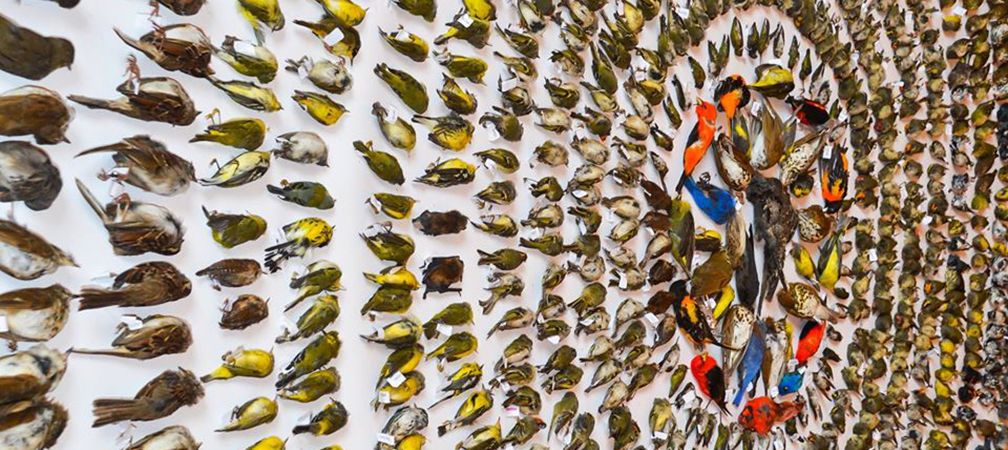
Birds cannot perceive glass the same way humans do. During the day, the reflections of sky and foliage on windows look like ideal places to fly towards. When they fly at full speed, they are unaware of the invisible barrier that awaits them.
At night, birds usually crash into lighted windows. Although the reason behind this is not fully understood, some sources suggest birds see indoor plants through well-lit windows or get disoriented due to artificial light. With approximately 80% of migratory birds in North America making their journey at night, these lights not only lead to more collisions, but also alter birds’ migratory pathways from their normal paths following the moon and stars. As a result, they end up flying towards more light-polluted areas, which often have more windows.
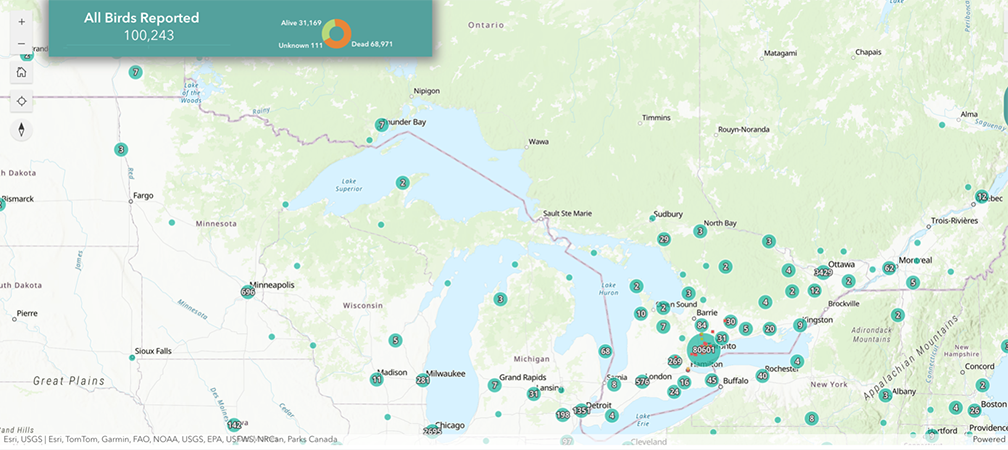
Although birds usually die after colliding with windows, if you happen to find one alive, they will probably have internal injuries that worsen, making them unable to survive in the wild. If you encounter a bird that has collided with a window, please take it to your nearest wildlife rehabilitator where it can recover away from light, noise, people and predators.
To safely capture an injured bird, it is recommended to calmly approach it from behind and catch it using both hands or a hand towel. This can be stressing for the bird, so it is best to not handle it for too long and to place it in either an unwaxed paper bag or a box with breathing holes as soon as possible. Afterwards, keep the bird in a dark and quiet place, do not feed it until you’ve talked to a wildlife rehabilitator, and only handle the bird when necessary, as too much stress can be lethal.
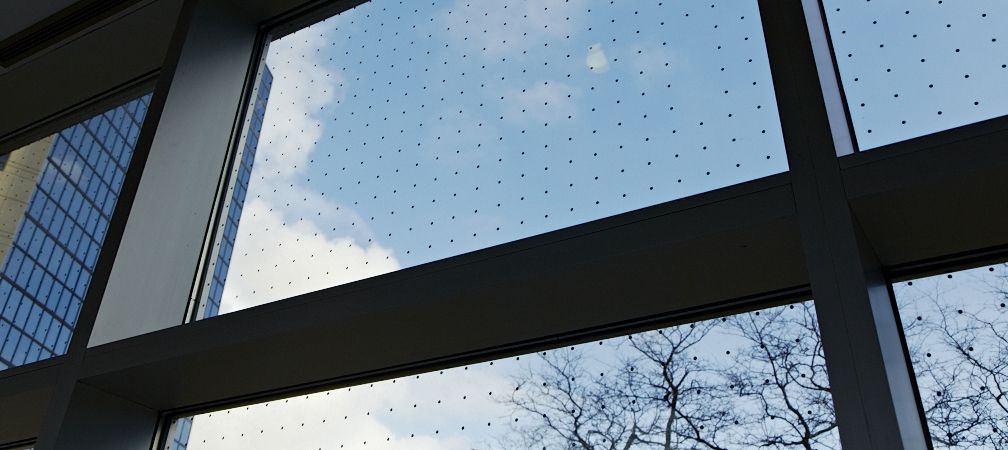
Prevention is the name of the game when it comes to bird collisions. High-risk windows are those that reflect the sky, trees, and branches, or even those located near bird feeders and other food sources.
The good news is that it’s easy to make your windows bird-safe. FLAP Canada provides a great resource for showing a variety of solutions. For example, placing stickers, decals, or tape on windows that have gaps no larger than 2 inches between them, both horizontally and vertically are proven to be effective. Other options include installing screens, shutters, or Acopian BirdSavers.
Additionally, limiting light usage at night between the hours of 11 p.m. to 6 a.m. can also help make buildings less attractive to birds while also minimizing impacts on migratory patterns.
You can also help birds by advocating for the inclusion of bird-friendly building design standards into the Ontario’s Building Code and learning more about migratory bird conservation in our province.