Ontario Nature Blog
Receive email alerts about breaking conservation
and environmental news.
© Lora Denis
As of March 2026, an additional 588 hectares of locally protected lands in Ontario officially count towards Canada’s target to protect and conserve 30% of land and water by 2030, a goal established under the Kunming-Montreal Global Biodiversity Framework and commonly known as the 30×30 target.
The 30×30 target is premised upon halting and reversing biodiversity loss through well protected natural areas that are equitably managed and respect and recognize Indigenous rights and territories. While the 30×30 target represents national and international goals, a whole-of-society approach is required, with local biodiversity champions often at the helm.
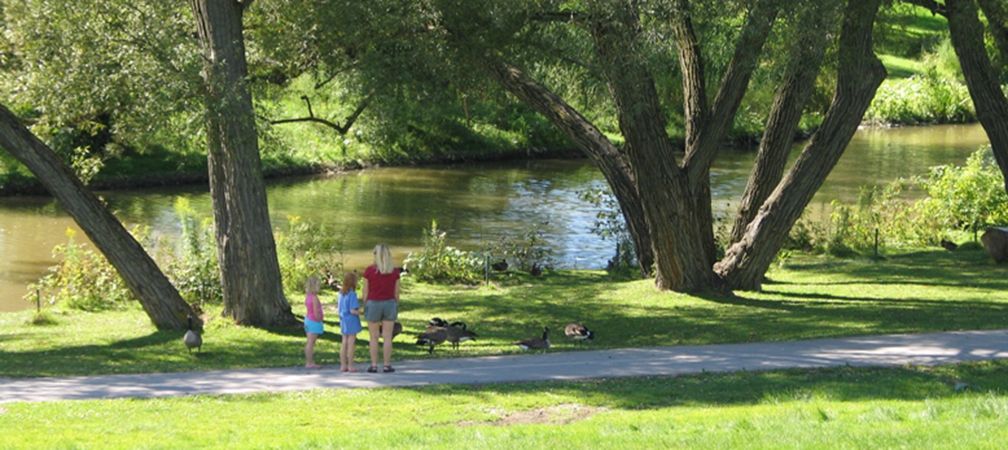
In 2025, we celebrate the following municipalities and a conservation authority who contributed their natural areas to the 30×30 target:
These partners worked with Ontario Nature to have their greenspaces evaluated against criteria of the pan-Canadian standard for protected areas.
The criteria include:
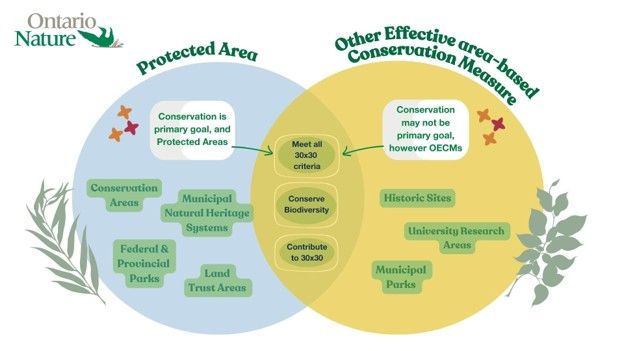
Once evaluated, sites that qualify are classified as either Protected Areas or Other Effective area-based Conservation Measures (OECMs). The differences between these two classifications are outlined in Figure 1.
Local protected areas provide myriad co-benefits across human and non-human communities. Often nestled within urban centers, these natural areas ensure crucial habitat for species across an increasingly fragmented landscape while providing clean air and water, reducing flood risks and heat-island effects. These spaces also support mental and physical wellness.
With the climate and biodiversity crises are accelerated by threats like habitat loss, pollution and industrialization, local planning authorities are increasingly recognizing the importance of embedding nature protection into their core planning frameworks. These measures safeguard a healthier future for all.
Often, the recipe for conservation success relies on collective action, particularly at the local level. In contributing to the 30×30 target, municipalities and conservation groups alike demonstrate the importance of biodiversity in our day-to-day lives.
If you’re interested in learning more about the protected and conserved areas close to home, feel free to browse the Canadian Protected and Conserved Areas Database, using the Open Maps portal.
This project was undertaken with the financial support of the Greenbelt Foundation.