Ontario Nature Blog
Receive email alerts about breaking conservation
and environmental news.
© Lora Denis
Ontario Nature is celebrating the opportunity to protect an additional 68 hectares at the Sauble Dunes Nature Reserve, following the 26.7-hectare expansion this spring. This expansion nearly doubles the total protected area of the now 146-hectare Nature Reserve, helping to strengthen the protection of Ontario’s wild species and spaces.
Besides its treed sand dunes and the rare species that call it home, part of what makes Sauble Dunes so special are the interdunal wetlands that lie between the dunes, including 33-hectares of the Chief’s Point Provincially Significant Wetland (PSW) Complex. Unlike other types of wetlands that are shaped by surrounding rivers, streams, or from inland drainage, this coastal wetland complex was shaped by the ancient, receding shorelines of Lake Algonquin (the most recent predecessor of Lake Huron). Over the course of thousands of years, the lakes’ water levels fluctuated leading to waves and wind depositing sand along the shoreline. As post-glacial lake levels receded, a series of dune ridges marking past shorelines were left behind, with low-lying depressions located in between. Over time, water collected within these depressions and gradually formed what we describe today as interdunal wetlands, a type of coastal wetland.
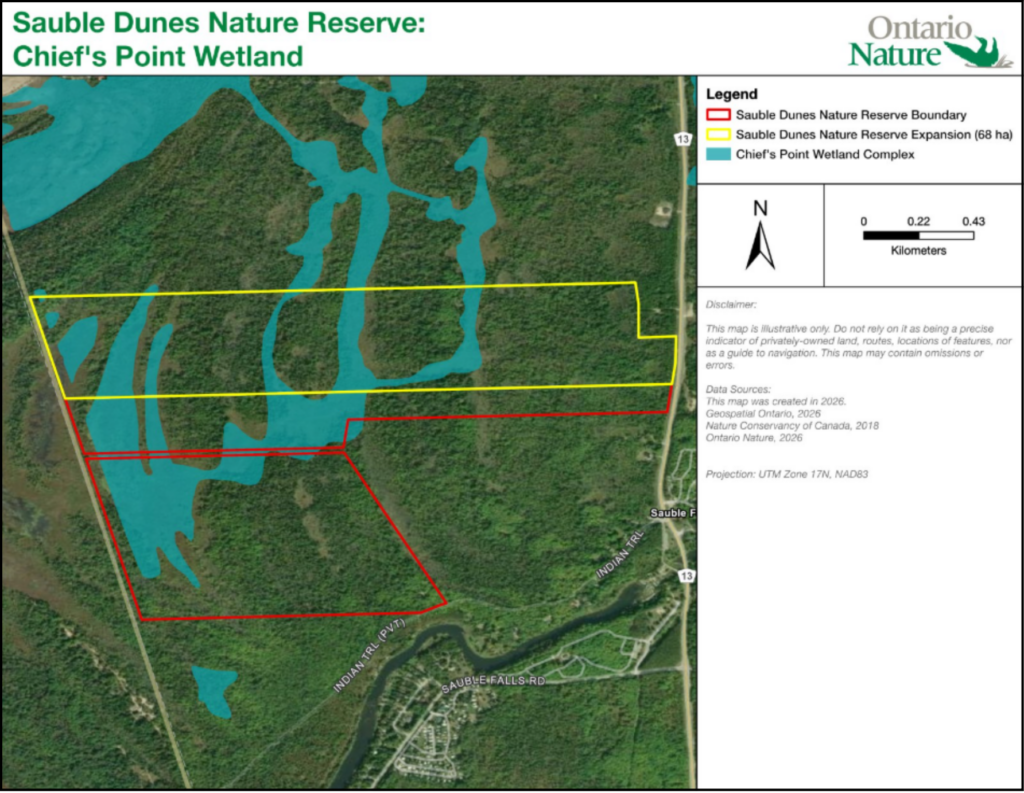
Coastal wetlands are among the Great Lakes’ Region’s most ecologically diverse and productive ecosystems. They are essential habitats for many types of wildlife and provide many benefits to people throughout the region. This type of ecosystem protects shorelines by absorbing wave action and reducing erosion, store storm runoff, trap carbon and other nutrients, and filter water. Despite their significance, coastal wetlands suffer from loss and fragmentation. For centuries, shoreline development and other human modifications have significantly disrupted and destroyed them. As modern human activity continues to reshape our shorelines, protecting landscapes like Chief’s Point PSW has become increasingly pertinent.
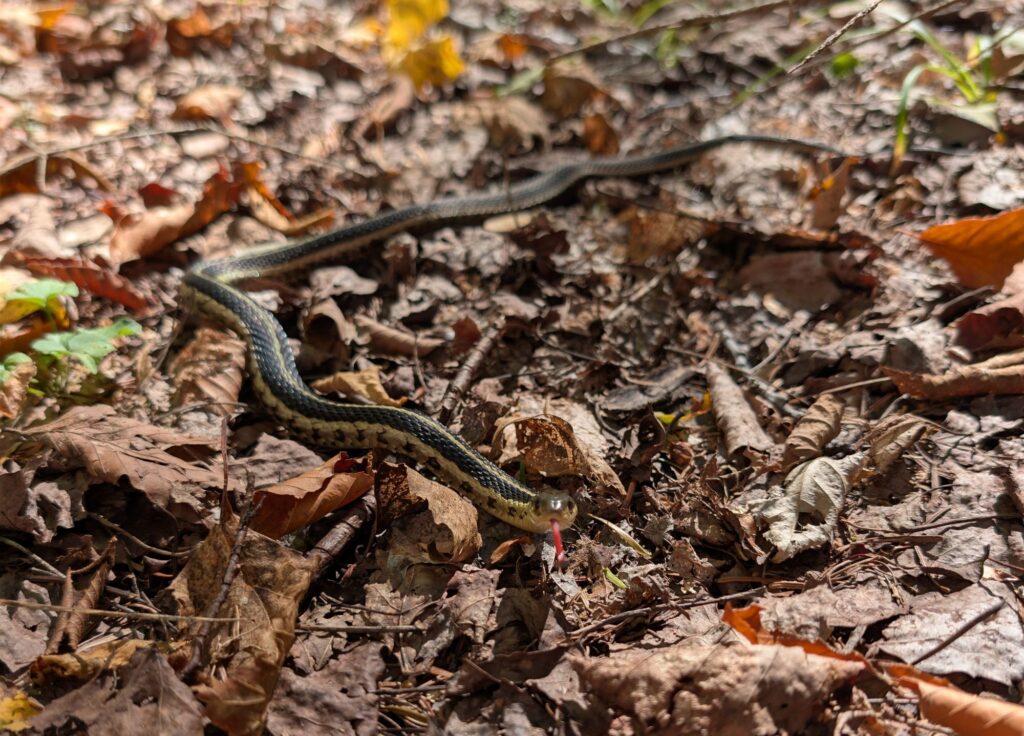
The Chief’s Point PSW is ecologically important for many reasons, including its size, and the diversity of habitat and wildlife it supports. The landscape is painted with marshes, fens, treed swamps, and vernal pools that provide habitat for 59 rare and at-risk species such as Canada warbler, black ash, snapping turtle, and many more.
Designation by the Ontario Government as a ‘Provincially Significant Wetland’ recognizes Chief’s Point PSW’s ecological value and affords the area legal protection against modifications, though these legal protections are always subject to change. Chief’s Point is also recognized by the Sauble Falls North Area of Natural and Scientific Interest (ANSI), which spans 764 hectares. An ANSI is a provincially identified area that has significant ecological value, which helps guide land-use and conservation planning.
By expanding Sauble Dunes Nature Reserve, Ontario Nature will ensure that these amazing habitats and species are protected in perpetuity. But this work takes a community, and the future of places like Chief’s Point PSW depends on the choices we make today.
With your support, we can expand Sauble Dunes Nature Reserve, and further the protections of Chief’s Point PSW forever! Please consider making a gift today to help permanently protect this special place.
By Shannon Underwood