Ontario Nature Blog
Receive email alerts about breaking conservation
and environmental news.
© Lora Denis
Incorporating nature into local development can have a significant impact on human health. Examples include improved sleep and academic performance in children, metabolic risk reduction in adults, and longevity in seniors. Though there is evidence for human benefit, it is particularly important for other species who may call these spaces home.
This is highlighted by a rare visitor to the Simcoe area this winter, as a great grey owl took up residence in a local wooded lot. Great grey owls are not known to be migratory species, however, will travel south during particularly harsh winter months in search of food sources. Great grey owls typically live in coniferous forests and muskegs. They will hunt during the day while watching prey from a low perch as they are elusive and often go unnoticed.

The owl brought birders from hours away for a chance to observe and photograph the rare visitor. It has been given the nickname, the “Phantom of the North” for its elusive nature, silent flight and ability to disappear into the forest, making it particularly special to witness.
With the rarity of the species brings challenges with ethical implications. Here are some practical tips to keep in mind:
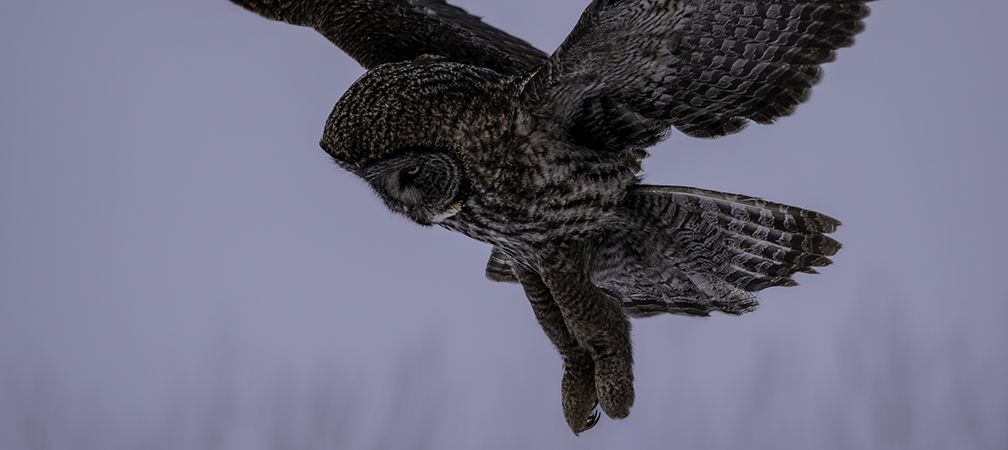
As the owl spent several months in the area, it was an amazing opportunity to observe such a magnificent species. It also highlighted the large role that humans play in their survival. The area that the owl spent most of the winter in is approximately 0.1-0.2 km² and is surrounded by commercial, industrial and medical infrastructure.
Though a strong case can be made for larger uninterrupted green spaces, the small size of the area highlights the significant impact a small area can have in conservation and wildlife protection. While urban development can follow many models, the 3-30–300 rule developed by Dr. Cecil Konijnendijk suggests that every resident see at least three decently-sized trees from home, have 30 percent tree canopy in their neighbourhood and live within 300 metres of the nearest park or public green space. These small changes can have a significant impact on both human health and provide valuable habitat for migratory species. For this rare visiting great grey owl this small green space meant survival in the harsh winter months.
