Ontario Nature Blog
Receive email alerts about breaking conservation
and environmental news.
© Lora Denis
Since its introduction in 2018, Ontario’s free-entry mining system has received significant provincial support despite criticisms raised by Indigenous communities and conservation watchdogs. With loose consultation protocols, broad ministerial powers, and sweeping legislative changes, the current provincial government is placing a significant emphasis on mining.
Cited as essential to Ontario’s ‘green transition’, Ontario’s mining system has received significant legislative and economic support to ensure the expedition of mining processes. To top it off, legislation like Bill 5 worsens existing flaws in the system by overruling democratic processes and laws that act as checks and balances.
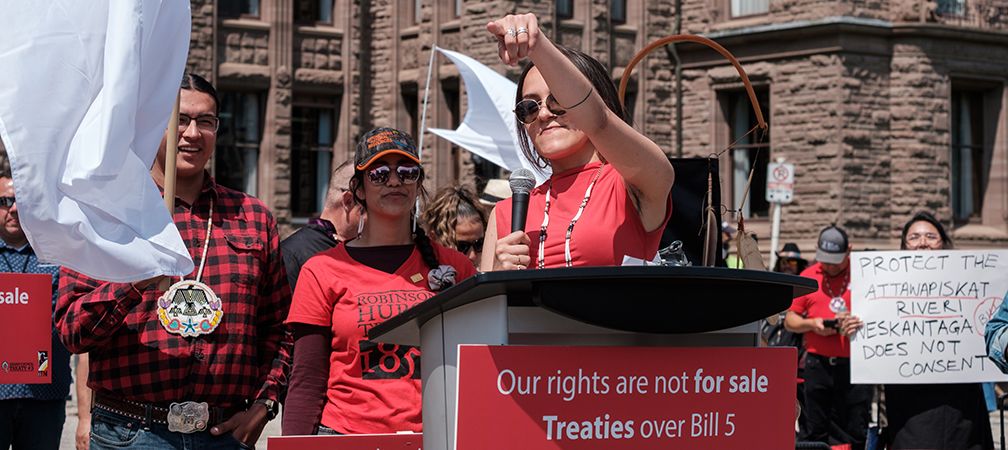
Meanwhile, the province faces immense legal pushback by Indigenous groups who have been overwhelmed by the sheer proliferation of mining claims. Yet, through its legislation, the Government of Ontario continues to claim its pathway to ‘clean energy’ necessitates weakening environmental protections, reducing democratic accountability and infringing on Indigenous rights.
The Government of Ontario prioritizes critical minerals as a solution to the climate crisis. However, mining without social and environmental responsibility exacerbates the interrelated climate and biodiversity crises. According to the World Resources Institute, global mining already represents 8% of the world’s carbon footprint, a value expected to rise alongside demand.
Fundamentally, mining development requires the removal of forest resources, and its activities can adversely alter the behavior and habitat of endangered species. It also poses a risk to local communities, as mismanaged mining tailings can contaminate nearby waterways and threaten vital food sources. Ultimately, mining must be carried out with social and environmental considerations to be considered a ‘clean’ source of energy.
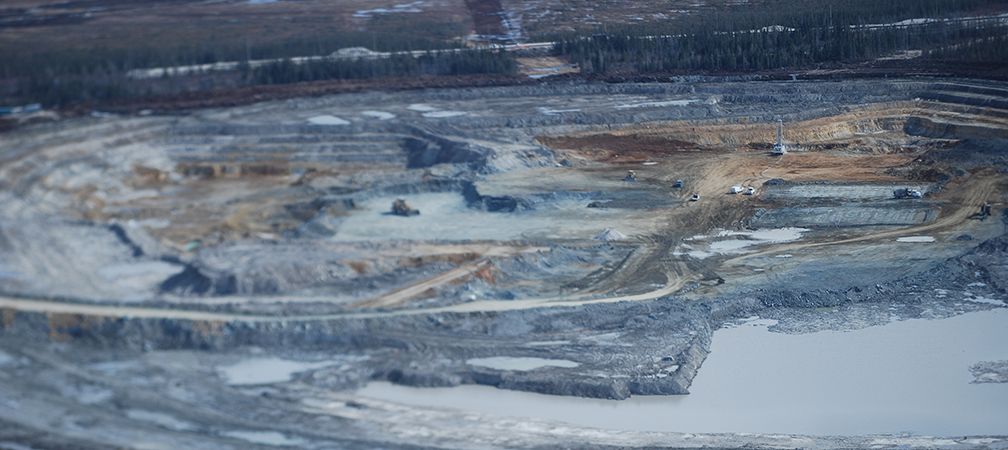
The Government of Ontario maintains that legislative changes are necessary to address economic uncertainty and are part of a balanced approach. But with omnibus bills weakening environmental safeguards such as the Endangered Species Act, there is no observable balance within provincial priorities.
The province has yet to commit to an official biodiversity strategy and fulfill recommended funding gaps. Ontario is falling behind comparable provinces like Quebec and British Columbia when it comes to protected areas, despite a plethora of protection opportunities that exist.
While mining can be a tool to phase out fossil fuels, overlooking environmental and social considerations perpetuates parallels between the extractive processes it aims to replace. Mining is a necessary part of the energy transition and is crucial for everyday technologies but must be done responsibly and sustainably.
The Government of Ontario needs to advance a truly balanced approach between conservation and economic development and recognize it is not a one or the other trade off. To start, the province can commit to implementing the Ontario Biodiversity Strategy, repealing Bill 5, upholding Indigenous rights, restoring labour and environmental standards and ensuring transparent governance.

Consultation with native leaders is absolutely necessary